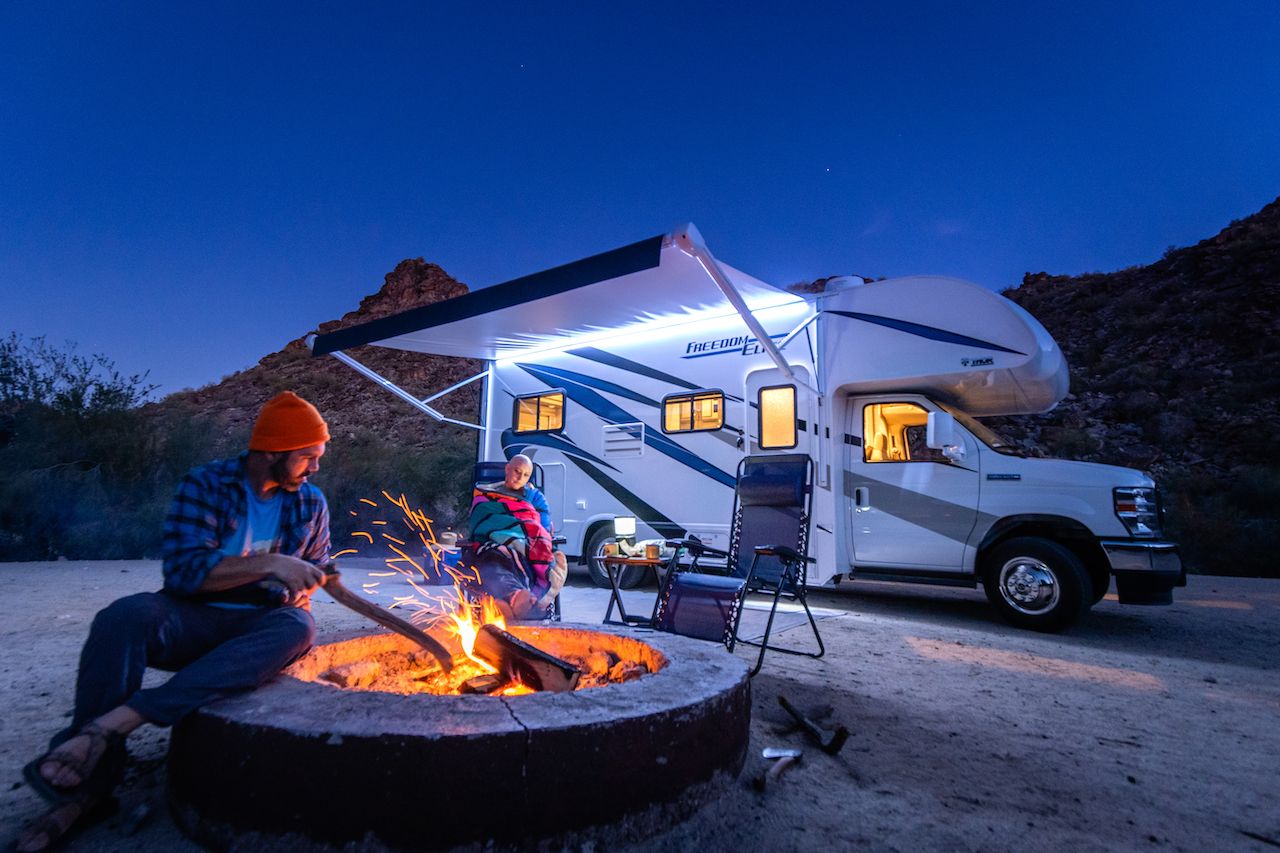
An RV Guide from the Oregon Coast to Cape Cod via the Two-Lane America
Oregon • Idaho • Wyoming • South Dakota • Minnesota • Wisconsin • Michigan • New York • Massachusetts
~3,800 Miles • Nine States • Cannon Beach to Provincetown • The Unhurried America
Introduction: America on Two Lanes
The interstate highway system is one of the great engineering achievements of the 20th century and one of the great impoverishments of the American road trip. It moves people efficiently and anonymously through a landscape reduced to a series of identical signs, franchise restaurants, and fuel stations that could be anywhere in the country because they are, effectively, everywhere in the country. The Cross-Country Northern Route is a deliberate rejection of this efficiency — a west-to-east transect of the United States on the older, slower, more specific roads that connect the places the interstates bypass: the coastal towns, the high desert communities, the prairie county seats, the Great Lakes port cities, the Rust Belt river valleys, the New England fishing villages.
The route follows a rough corridor from the Oregon Coast east through the Columbia Plateau and Idaho’s high desert, north and east through Yellowstone and the Wyoming high country, across the South Dakota Badlands and Black Hills, through the Minnesota lake country and Wisconsin’s Door Peninsula, across the Upper Peninsula of Michigan, through upstate New York’s Finger Lakes and Hudson Valley, and finally to the Massachusetts Cape Cod coast. It uses US-20 as its primary navigational spine through much of the country — the longest US highway in existence at 3,365 miles from Newport, Oregon, to Boston, Massachusetts — supplemented by state routes and byways that deliver more scenery and more character than the numbered federal highway alone.
The route covers approximately 3,800 miles at a pace that makes sense: 21 to 28 days for the full coast-to-coast run, longer for those who want to linger in the places that ask for it. It is the right road for long-term RVers doing their first or fifth coast-to-coast crossing who want to see the country rather than traverse it — who want to understand the scale and variety of the American landscape not as a sequence of headline attractions but as a continuous, shifting experience of place that only the two-lane road can deliver.
Route Snapshot Approximately 3,800 miles from Cannon Beach, Oregon, to Provincetown, Massachusetts. Nine to ten states depending on routing. Plan 21 to 28 days. US-20 serves as the primary highway spine; the guide supplements it with superior scenic alternatives at several points. This is a west-to-east route by design — the prevailing winds and the psychological logic of moving toward the Atlantic are both in your favor.
Planning Your Cross-Country Northern Route
Why West to East
The Cross-Country Northern Route runs west to east for practical and experiential reasons. Prevailing winds in the continental United States blow from west to east, which means a west-to-east RV traveler generally has a slight tailwind advantage over the full trip length — meaningful for fuel economy over 3,800 miles. More importantly, the psychological and experiential logic of the route flows west to east: the Oregon Coast’s dramatic Pacific edge is the appropriate beginning, the high drama of Yellowstone and the Badlands builds in the middle, and the intimacy of New England’s human-scale landscape provides the appropriate landing at the end. Running the route in reverse — Cape Cod to Cannon Beach — works but the build feels backward.
The route also aligns with the historical direction of American movement. The Oregon Trail, the transcontinental railroad, and the immigrant corridors of the 19th and early 20th centuries all moved west. The Cross-Country Northern Route moves east, which is the direction of return and reflection rather than departure and ambition. After three weeks on this road, arriving at the Atlantic coast feels like completing something, and the specific quality of that completion rewards the directional choice.
Best Time to Travel
Late May through mid-September is the primary travel window for the full Cross-Country Northern Route. The Oregon Coast and Pacific Northwest are accessible year-round but are rainiest from October through April. Yellowstone’s interior roads are closed from November through late April. The South Dakota Badlands are accessible year-round but are most rewarding in the mild temperatures of spring and fall. Minnesota, Wisconsin, and Michigan’s Upper Peninsula are magnificent in summer and early fall but can be cold and wet in May.
The single finest departure window is mid-June. This timing puts you on the Oregon Coast before the height of summer crowds, through Yellowstone in late June when the park is fully open and the early-summer wildflowers are at their best, across the Badlands in early July when the days are long and the heat manageable, and into New England in mid-to-late July at the peak of the summer season. A late September departure catches fall color in Minnesota and New England but risks snow at Yellowstone and the Wyoming passes.
A June 15 departure from Cannon Beach will put you at Cape Cod approximately 25 to 30 days later, arriving in mid-July. This is an excellent outcome for those who want to end the trip at the Cape during its best weather window.
The Two-Lane Philosophy
The Cross-Country Northern Route’s defining character is its commitment to the two-lane road as the primary mode of American travel. US-20 and its companion state routes are slower than the interstates by design — speed limits of 55 to 65 mph through towns, traffic signals, farm machinery sharing the road in the Plains states, the necessary pauses at railroad crossings. These are not inconveniences. They are the features that make the route what it is. The two-lane road requires presence: you cannot drive it on autopilot. The landscape comes to you at a pace that allows it to register, and the towns you pass through are real towns rather than exit-ramp abstractions.
The practical discipline of two-lane travel is lower daily mileage and earlier starts. Budget 200 to 280 miles per day rather than the interstate’s possible 400 to 500. Start by 7 a.m. to make your planned stopping points by early afternoon, leaving time for exploration. The campgrounds along two-lane routes tend to fill less predictably than those on the interstate system; an early arrival gives you first choice of sites and an afternoon to walk the town.
RV Considerations for the Northern Route
The Cross-Country Northern Route is among the most RV-friendly long-distance routes in this guide series, with excellent two-lane road infrastructure through most of its length and a campground network that ranges from excellent private RV parks in the cities to outstanding National Forest and BLM dispersed camping across the Western segments. The specific considerations that deserve advance planning are primarily in Oregon, Wyoming, and the two-lane mountain passes.
- Oregon Coast tunnels: Several short tunnels on US-101 along the Oregon Coast have height restrictions. Most are 14 to 16 feet, which accommodates the majority of RVs, but check your rig’s height against the Oregon DOT tunnel clearance database before planning the coastal segment.
- Yellowstone road grades: The major road climbs within Yellowstone — the approach to Dunraven Pass and the Beartooth Highway alternative — are steep. Engine braking and brake management protocols from the Rocky Mountain guide in this series apply here equally.
- South Dakota gravel: Several of the most rewarding detour roads in the Badlands and Black Hills are unpaved. A passenger vehicle or tow car is the practical way to explore these; leave the RV at a campground and take the secondary car.
- Upper Peninsula bridge: The Mackinac Bridge connecting the Lower and Upper Peninsulas of Michigan has a toll and specific restrictions for high-profile vehicles in strong crosswinds. Winds above 30 mph may require slower crossings or escort. Check current conditions at mackinacbridge.org before crossing.
- New England roads: As noted in the Fall Foliage guide in this series, New England’s secondary roads were not designed for large vehicles. Cape Cod’s Route 6A through the historic villages is narrow with low-overhanging trees; the Route 6 Mid-Cape Highway is the practical RV route. Provincetown’s Commercial Street is not accessible to RVs; park at the campground and bicycle or walk into town.
Campground Strategy
The Northern Route’s campground landscape divides neatly by region. In Oregon and Idaho, a mix of state parks, National Forest campgrounds, and BLM dispersed sites provides excellent options with advance planning for the state parks but plenty of first-come flexibility in the national lands. Wyoming’s campgrounds in Yellowstone and the surrounding national forests are highly competitive for peak summer dates and require Recreation.gov bookings at the six-month window. The South Dakota and Great Plains segments have abundant private RV parks in the cities and good state park options in the scenic areas. The Upper Midwest and Great Lakes segments are well-served by state park campgrounds and private parks. New England at peak summer requires early reservations, particularly for Cape Cod.
- Oregon State Parks (oregonstateparks.org): Reservations open 9 months in advance. Oswald West, Cape Lookout, and Fort Stevens are the most sought-after coastal sites.
- Recreation.gov: Yellowstone campgrounds, Grand Teton, and national forest campgrounds in Wyoming. Book at the 6-month window for peak summer dates without exception.
- South Dakota State Parks (sdgfp.info): Custer State Park requires advance reservations; Badlands campgrounds are first-come, first-served.
- Michigan DNR (michigan.gov/dnr): Upper Peninsula campgrounds, particularly in Pictured Rocks National Lakeshore, require advance reservations through Recreation.gov.
- Cape Cod National Seashore: Campgrounds are not within the national seashore itself; private campgrounds in Truro and Wellfleet, plus Nickerson State Park in Brewster, are the primary options. Book months in advance for July arrivals.
Oregon: The Pacific Coast Beginning
Cannon Beach: The Route’s Starting Point
Cannon Beach is the finest small town on the Oregon Coast and the appropriate beginning for the Cross-Country Northern Route — a place of sufficient visual drama to anchor the memory of where the trip started for the full four weeks that follow. Haystack Rock, the 235-foot basalt sea stack rising from the surf 300 yards offshore, is the most recognizable landmark on the Oregon Coast and one of the most photographed objects in the Pacific Northwest. At low tide, the tidal pools around Haystack Rock’s base are accessible on foot and contain sea stars, anemones, hermit crabs, and nesting tufted puffins in spring and early summer in a display of tidal ecology that rewards an hour at any age.
The town of Cannon Beach itself — a planned arts community of galleries, bookshops, and restaurants in low-slung wood buildings set among Sitka spruce — has maintained its character through the decades of increasing visitation with notable success. The Cannon Beach Book Company on Hemlock Street is the finest independent bookstore on the northern Oregon Coast. The Warren House Pub is the right place to spend the first evening of the trip, with a local Oregon Dungeness crab or Oregon Coast Chinook salmon and a local brewery’s IPA and the Pacific still audible outside.
Ecola State Park, immediately north of Cannon Beach, provides the finest elevated view of Haystack Rock and the stretch of coast south toward Arch Cape in a park of old-growth Sitka spruce above the surf line. The Indian Beach trail descends to a cove that served as the setting for The Goonies film. Oswald West State Park, 10 miles south of Cannon Beach, is one of the finest coastal state parks in Oregon — old-growth forest descending to Short Sands Beach, a sheltered cove popular with surfers, with campsites accessible by wheelbarrow from the highway parking area. It is among the finest walk-in camping experiences on the Oregon Coast, though the wheelbarrow provision makes it impractical for RVs.
Timing the Pacific Coast Arrive at Haystack Rock at low tide. The Oregon Coast Aquarium’s tide prediction tables or the NOAA tide prediction service (tidesandcurrents.noaa.gov) show the times for the Cannon Beach gauge. A minus tide (below 0 feet) exposes the full tidal pool zone and is the optimal condition for exploration. The best minus tides at Cannon Beach in summer occur in the early morning hours.
The Northern Oregon Coast: Astoria to Tillamook
The drive north from Cannon Beach on US-101 to Astoria covers the northern Oregon Coast’s finest stretch of headlands, river mouths, and fishing communities before reaching the Columbia River and the town that has been called the “Graveyard of the Pacific” for the ships that met their end on the bar where the river meets the ocean. Astoria, at the mouth of the Columbia, is the oldest American settlement west of the Rocky Mountains — a fur trade post established by John Jacob Astor’s Pacific Fur Company in 1811 — and a Victorian port city whose painted commercial buildings and captains’ houses on the steep hillside above the river have survived with remarkable completeness.
The Astoria Column on Coxcomb Hill, a 125-foot painted concrete column modeled on Trajan’s Column in Rome, depicts the history of the Oregon country in a spiral frieze from the Lewis and Clark expedition through the settlement era. The view from the top — a 164-step internal staircase to an observation deck — takes in the Columbia River, the Washington shore, the Pacific, and the Astoria Bridge’s 4.1-mile span in a 360-degree panorama. The Maritime Museum on the Columbia riverfront presents the bar pilots’ extraordinary tradition and the history of Columbia River commerce.
South of Cannon Beach, the drive on US-101 through Tillamook and the Three Capes Scenic Route — Cape Meares, Cape Lookout, and Cape Kiwanda — provides an excellent coastal alternative to US-101’s direct inland bypass. Cape Kiwanda’s dory fishing fleet, launched directly through the surf by tractor in the morning and retrieved the same way in the afternoon, is one of the most visually distinctive fishing operations on the Pacific coast. The Tillamook Creamery in Tillamook, the facility where the Tillamook County Creamery Association’s famous cheddar is made, offers free self-guided tours of the cheese-making operation through a glass-sided observation corridor.
The Oregon Coast to the Columbia Plateau: US-26 East
The transition from the Oregon Coast to the state’s interior follows US-26 east from Cannon Beach through the Coast Range and the Tualatin Valley to Portland, then continues east on US-26 through the Columbia River Gorge’s south side and onto the Columbia Plateau. This transition from coastal forest to high desert plateau is one of the most dramatic ecological shifts on the entire cross-country route — in the space of 150 miles, you cross from a temperate rainforest receiving 100 inches of annual precipitation to a semi-arid plateau receiving 10 to 15 inches, and the landscape changes accordingly: the Sitka spruce and Douglas fir give way to ponderosa pine, then juniper, then sagebrush, in a gradient of plant communities that marks the passage through the Cascades’ rain shadow.
Portland, Oregon, deserves more than a highway bypass. The city’s Powell’s Books on Burnside, the largest independent bookstore in the world with over a million new and used titles across a full city block, is essential for stocking the rig’s library for the journey ahead. The city’s food cart culture, the Saturday Market under the Burnside Bridge, and the Japanese Garden in Washington Park are each worth several hours. The Columbia River Gorge east of Portland — the Columbia Gorge National Scenic Area — provides the finest river gorge drive in the Pacific Northwest on the Historic Columbia River Highway (US-30), a 1922 road engineered by Samuel Lancaster along the Gorge’s south wall with masonry bridges and tunnels that are an engineering achievement comparable in its way to the Beartooth Highway further east.
Oregon Trail The Historic Columbia River Highway follows the route that Lewis and Clark descended by canoe in October 1805 on their return journey to the Pacific. The Gorge’s basalt walls, deposited by successive lava flows from the Cascades and carved by the Missoula Floods of 15,000 years ago, are the most dramatic river walls accessible by paved road in the Pacific Northwest. Multnomah Falls — 620 feet, the second-tallest year-round waterfall in the United States — drops from the Gorge wall to a pool at the highway edge. It is one of the most visited natural sites in Oregon and worth the crowds for five minutes at the base.
Idaho: The High Desert and the Snake River Plain
Eastern Oregon and the Owyhee Plateau
US-20 from Burns, Oregon, east to the Idaho border traverses the High Desert of eastern Oregon — one of the most remote and undervisited landscapes in the continental United States. The Owyhee Uplands, the Great Basin sagebrush steppe, and the Steens Mountain escarpment (Oregon’s highest fault-block mountain, rising 9,733 feet from the Alvord Desert’s alkali flats in a vertical relief of 5,000 feet) create a landscape of extraordinary scale and emptiness that prepares the traveler psychologically for the Great Plains further east.
The Malheur National Wildlife Refuge, on the Blitzen River south of Burns, is one of the most important wetland stopover habitats on the Pacific Flyway — a 187,000-acre complex of shallow lakes, marshes, and upland meadows that supports 320 bird species during migration and nesting. In spring (April through May), the refuge’s sandhill crane, white pelican, and shorebird concentrations are extraordinary. The refuge’s prominence in the 2016 occupation by the Bundy group brought national attention to land management politics in the rural West; the visitor center presents the refuge’s 50-year conservation history without editorial comment on the occupation.
Boise, Idaho, is the practical services hub for the transition from the Oregon high desert into the Snake River Plain. As covered in the Rocky Mountain National Parks guide in this series, Boise is an underrated small city of genuine quality — provision here completely, as the rural stretches ahead through southern Idaho and into Wyoming are long and services are limited.
The Snake River Plain: Craters of the Moon to Twin Falls
US-20 across the Snake River Plain of southern Idaho is one of the finest high-desert driving experiences in the American West — a straight, wide road across a lava plateau between volcanic mountain ranges, with the Snake River cutting its canyon below the plain’s level in reaches not visible from the highway. Craters of the Moon National Monument, covered in detail in the Rocky Mountain National Parks guide, is the defining geological attraction of the Snake River Plain — a 618,000-acre lava field of such alienating appearance that it seems to belong to a different planet.
Twin Falls, Idaho, sits above the Snake River Canyon at a point where the river drops 212 feet over Shoshone Falls — a waterfall wider than Niagara and, in high spring runoff, more dramatic. Twin Falls is also the site where Evel Knievel attempted to jump the Snake River Canyon in a steam-powered rocket in 1974, an event that drew 40,000 spectators and ended with the rocket drifting into the canyon short of the far rim. The jump site on the north rim is marked; the canyon views are spectacular.
The Perrine Bridge in Twin Falls, a 486-foot-high span over the Snake River Canyon completed in 1976, is legally open to BASE jumping — one of the very few bridges in the United States where BASE jumping is explicitly permitted. On any given morning, jumpers leap from the bridge railing with wingsuits or parachutes in a sport of determined voluntaryism. The canyon view from the Perrine Bridge is one of the most dramatic roadside views in Idaho.
Oregon Trail The Snake River Plain follows the general path of the Oregon Trail, and several of the most significant Oregon Trail landmarks in Idaho are visible from or accessible on US-20 and US-26. The Register Rock near Rockland — a basalt boulder covered with emigrant signatures from the 1840s and 1850s — is one of the finest surviving Oregon Trail registers in the country. The ruts of the original trail are visible in the volcanic soil at dozens of points along the southern Idaho route, preserved by the same combination of compaction and desert dryness that preserved Roman roads.
Hells Canyon and the Salmon River Country
The northern Idaho alternative to US-20’s straight Snake River Plain crossing uses US-95 north through McCall and the Salmon River country before cutting east through the Sawtooth Range via SR-21 and joining US-20 at Arco, Idaho. This alternative adds 80 miles and several hours but passes through the finest mountain country in Idaho outside the Sawtooths covered in the Rocky Mountain guide.
Hells Canyon, on the Snake River between Idaho and Oregon northwest of McCall, is the deepest river gorge in North America — deeper than the Grand Canyon by 500 feet at its deepest point, 7,993 feet from the summit of He Devil Mountain to the Snake River’s surface at the canyon floor. There is no road to the canyon bottom; access is by jet boat from Lewiston, Idaho, or by rafting the Snake’s wild whitewater from Hells Canyon Dam to the Oregon border. The Hells Canyon Overlook at Hat Point, accessible by a 24-mile mountain road from Imnaha, Oregon, provides the finest aerial view of the canyon available by land.
Wyoming: Yellowstone and the High Country
The route enters Wyoming from Idaho through the Targhee National Forest and the western approaches to Yellowstone — a transition that the landscape marks unmistakably. The Teton Range appears to the east on US-20’s approach through the Island Park plateau, the volcanic caldera of the Henry’s Fork of the Snake River, in a wall of granite peaks that announces the Rocky Mountain high country with appropriate drama. From here, the route joins the Rocky Mountain National Parks itinerary covered in the dedicated guide in this series for the Yellowstone, Grand Teton, and Wind River segments, and readers are encouraged to consult that guide for the full detail of those parks.
What is worth noting here, in the context of the cross-country route, is what Yellowstone and Grand Teton mean when they appear in the middle of a 3,800-mile journey. After three days of Oregon high desert and Idaho’s volcanic plain, the sudden appearance of the Tetons’ naked granite wall above the Snake River’s flats is genuinely startling — a reminder that the American landscape’s capacity for drama is inexhaustible and that the country’s variety within a single transect cannot be adequately anticipated. The traveler who has spent three days in eastern Oregon’s emptiness arrives at Yellowstone with senses sharpened by solitude and sees the thermal landscape with a freshness that the traveler arriving directly from an airport cannot replicate.
The Beartooth Highway Alternative
US-20 through Wyoming leads east through Cody and the Bighorn Basin, but the finest Wyoming segment of the Cross-Country Northern Route is the Beartooth Highway (US-212) from Cooke City at Yellowstone’s northeast entrance through the Beartooth Plateau to Red Lodge, Montana. This 68-mile road — called by Charles Kuralt “the most beautiful drive in America” in a career spent covering beautiful drives — climbs to 10,947 feet on a series of switchbacks that are engineering spectacles in their own right, traverses the largest high-altitude plateau in the continental United States, and provides views of a landscape of tundra, snow, and granite that feels more Icelandic than American.
The Beartooth Highway is fully accessible to most RVs, though the grades are steep and the switchbacks demand attention. The road is typically open from Memorial Day through mid-October; check current status at beartoothhighway.com before committing to the detour. Red Lodge, Montana, at the highway’s eastern terminus, is a former coal mining town turned outdoor recreation community with an excellent main street, several fine restaurants, and the Carbon County Historical Museum’s collection on the Norwegian and Finnish immigrant miners who built the town in the 1890s.
Cody and the Bighorn Basin
Cody, Wyoming, founded in 1896 by William F. “Buffalo Bill” Cody, is the eastern gateway to Yellowstone and the home of the Buffalo Bill Center of the West — five museums in a single complex that constitutes the finest cultural institution in Wyoming. The Buffalo Bill Museum, the Plains Indian Museum, the Whitney Western Art Museum, the Cody Firearms Museum, and the Draper Natural History Museum together present the history, art, and natural world of the American West at a depth and quality that rivals the Smithsonian in its specific focus. The Plains Indian Museum’s collection of Sioux, Arapaho, Crow, and Shoshone material culture is the most comprehensive of any regional museum in the West.
The Chief Joseph Scenic Byway (WY-296), running north from Cody to Cooke City through the Clarks Fork Canyon, is an alternative approach to the Beartooth that adds an essential dimension to Wyoming’s high country segment. The highway follows the escape route taken by Chief Joseph and the Nez Perce in 1877 during their 1,170-mile flight from US Army pursuit, through the Canyon’s 2,000-foot walls to the Yellowstone plateau. The canyon scenery is extraordinary and the historical resonance is one of the most powerful on the route.
Oregon Trail The route through central Wyoming — US-20 east from Worland through Thermopolis and into Casper — crosses the Oregon Trail corridor at several points. Casper, Wyoming, was a significant Oregon Trail crossing of the North Platte River, and the National Historic Trails Interpretive Center in Casper presents the Trail’s full history across all of its branches — Oregon, California, Mormon, and Pony Express — with the finest interpretive materials on the overland migration available at any trail site in the country.
Thermopolis: The World’s Largest Hot Spring
Thermopolis, Wyoming, in the Wind River Canyon south of Worland, contains Hot Springs State Park — home to the largest mineral hot springs in the world by volume. The Big Spring produces 8,000 gallons of 135°F water per minute; the park’s terraces and the free state bathhouse provide the finest public hot spring bathing in Wyoming. The Wind River Canyon itself, a 25-mile gorge of Precambrian granite cut by the Wind River through the Owl Creek Mountains, provides the most dramatic canyon drive in central Wyoming and one of the finest in the state.
South Dakota: The Badlands and the Black Hills
The Badlands: Where the Prairie Breaks
The South Dakota Badlands are one of the most disorienting landscapes in North America — not in the vertiginous way of the Grand Canyon, but in the uncanny way of a landscape that looks like nothing the eye has been trained to interpret. The Badlands Wall, a 60-mile escarpment of eroded buttes, spires, and pinnacles in layered gray, brown, and rust-colored sediment, rises abruptly from the flat grasslands of the mixed-grass prairie in formations so compressed and complex that they seem to be the result of deliberate artistic intention rather than 500,000 years of wind and water erosion.
The formations are the exposed sediments of an ancient floodplain — ash, silt, and clay deposited between 37 and 28 million years ago and then eroded by the White River and its tributaries in a process that continues at a rate of approximately one inch per year. The fossil record exposed by this erosion is extraordinary: titanotheres, ancient three-toed horses, saber-toothed cats, and early rhinoceroses have all been recovered from the Badlands formations, and new specimens surface regularly after rainstorms.
Badlands National Park’s Loop Road through the north unit is the primary visitor route, running 24 miles from the Ben Reifel Visitor Center to the Wall entrance through the finest concentration of formation scenery. The Door Trail (0.75 miles) and the Notch Trail (1.5 miles round trip with a log ladder and a canyon traverse) are the finest short hikes in the park. The Cedar Pass campground accommodates RVs and is the most conveniently located campground for the Loop Road; the Sage Creek primitive campground on the west side of the park provides the finest solitude in the Badlands and is accessible to most RVs via a gravel road.
Open Road The Badlands at dawn and dusk are at their finest. The low-angle light catches the formation walls in warm orange and the long shadows emphasize the geological complexity that flat midday light flattens to uniformity. The Prairie Wind Overlook on the Loop Road facing west provides the finest dusk vantage point in the park. Plan to be there 20 minutes before sunset.
Wall Drug and the Prairie Experience
Wall Drug Store in Wall, South Dakota, is the most self-aware roadside attraction in America — a five-block commercial complex that began as a small drugstore in 1931 when owner Ted Hustead started advertising free ice water to Depression-era travelers on US-14. The free ice water promotion evolved into a sign campaign that eventually placed Wall Drug signs on every inhabited continent and an establishment that now draws two million visitors annually. It sells cowboy boots, Mount Rushmore snow globes, 5-cent coffee (still), donuts, and Western art with equal enthusiasm and no apparent curatorial principle. It is simultaneously ridiculous and genuinely charming and entirely worth 30 minutes.
The town of Wall beyond the drugstore is a working agricultural community of 900 people at the edge of the Badlands Wall, and its commercial street’s Western building facades and the landscape’s transition from the Badlands formations to the open grasslands of the Great Plains is as abrupt and complete as any landscape transition on the Northern Route. East of Wall, the Great Plains begin in earnest.
The Black Hills: The Sacred Center
The Black Hills of western South Dakota — named by the Lakota Sioux for the dark ponderosa pine forest that makes the hills appear black from the surrounding grasslands — rise nearly 4,000 feet above the Great Plains in an isolated mountain range of 1.7 billion-year-old granite surrounded by rings of sedimentary rock. They are the oldest mountains in the United States and the most sacred landscape of the Lakota people, whose 1868 treaty with the United States guaranteed them the Black Hills in perpetuity before gold was discovered in 1874 and the treaty was abrogated in a process whose legal and moral consequences continue to unfold.
Mount Rushmore National Memorial, the 60-foot presidential portraits carved into the granite of Mount Rushmore between 1927 and 1941, is one of the most recognized objects in American public art — a monument of genuine technical achievement and deeply contested cultural meaning. The faces of Washington, Jefferson, Theodore Roosevelt, and Lincoln look out over the Black Hills from a site that was chosen because its southeastern exposure provides maximum sun exposure for carving and because it faced in the direction of maximum tourist traffic from the East. The memorial is worth a visit for the engineering and the interpretive context; the cultural politics of carving four American presidents into a mountain the Lakota had been treaty-guaranteed requires honest engagement.
The Crazy Horse Memorial, 17 miles southwest of Mount Rushmore, is the response: a monument to the Oglala Lakota war leader being carved from Thunderhead Mountain by the Ziolkowski family since 1948 on behalf of the Lakota people. When complete, the mountain carving will be 641 feet wide and 563 feet tall — dwarfing Mount Rushmore by any measure. The project is privately funded and rejects all federal and state funding as a matter of principle. The face of Crazy Horse was completed and dedicated in 1998; the full figure with the outstretched arm pointing east and the horse’s head below will take decades more to complete. The orientation center presents the Lakota history and the Ziolkowski family’s extraordinary commitment with appropriate context.
Custer State Park, south of the Black Hills’ central core, is the finest state park in South Dakota and one of the finest in the country — a 71,000-acre park of meadows, granite peaks, and mixed-grass prairie supporting the second-largest publicly owned bison herd in the United States. The Wildlife Loop Road through the park’s southern grasslands provides reliable bison, pronghorn, burro, elk, and prairie dog viewing in a setting that gives a clear impression of what the Great Plains looked like before the 20th century’s agricultural transformation. The Needles Highway and the Iron Mountain Road, two engineering marvels of 1930s road construction through the Black Hills’ granite formations, are among the finest scenic drives in the Midwest.
The Great Plains: The Sky Country
East of the Black Hills, the Northern Route enters the Great Plains proper — the vast, nearly flat, semi-arid grassland that covers the central United States from the Rocky Mountains to the Missouri River. The Plains are the most underappreciated landscape in the country, routinely dismissed as the empty middle that must be traversed to reach the interesting parts on either side. This dismissal is wrong. The Great Plains are a landscape of tremendous scale, ecological complexity, and human history, and the traveler who gives them the attention they deserve will find the transition from the Black Hills’ granite domes to the ocean-flat grasslands of central South Dakota and Minnesota to be one of the most psychologically powerful shifts on the entire cross-country route.
The scale of the sky over the Great Plains is the defining sensory experience. It is not that the sky is different here; it is that the absence of features obstructing the horizon in every direction allows the sky to occupy a larger proportion of the visual field than anywhere east of the Rockies. The proportion of sky to land, roughly equal in the eastern forests and the mountains, inverts over the Plains — the sky becomes the dominant element of the landscape, and the quality of the light and the cloud formations acquire an importance in the daily experience of travel that they cannot achieve in more enclosed landscapes.
The Badlands East: Pierre to the Missouri River
Pierre, the South Dakota state capital, sits on the east bank of the Missouri River in the geographical center of the state and the approximate transition between the arid western Great Plains and the more humid eastern Plains. The crossing of the Missouri at Pierre marks a genuine biogeographical boundary: west of the Missouri, the short-grass prairie; east of the Missouri, the mixed-grass prairie transitioning toward the tallgrass prairie of Minnesota and Iowa. The Missouri River at Pierre is broad, powerful, and still brown with the silt of the Northern Plains in a way that makes it clear this is the same river that carries its burden south to St. Louis and eventually to the Gulf.
The Oahe Dam and Lake Oahe north of Pierre, the fourth-largest reservoir in the United States, flooded 370,000 acres of Missouri River bottomland and permanently displaced the Cheyenne River and Standing Rock Sioux communities in the 1950s and 1960s. The cultural and environmental consequences of the Pick-Sloan dam system’s construction on the Missouri are among the most significant and least publicly discussed events in modern Native American history. The Akta Lakota Museum and Cultural Center in Chamberlain, 90 miles east of Pierre on I-90, presents the Sioux Nation’s cultural history with depth and honesty.
Open Road The Dignity sculpture on the US-50 bluff above Chamberlain, South Dakota — a 50-foot stainless steel figure of a Lakota woman with a star quilt raised in offering above the Missouri River — is one of the finest pieces of public sculpture in the Great Plains and one of the most emotionally resonant sites on the US-20 corridor. It is visible for miles and worth stopping for. The bluff view of the Missouri River below is among the finest on the entire route.
Minnesota: Lakes, Prairies, and the Boundary Waters
The Northern Route enters Minnesota from South Dakota across a landscape of deep black glacial soils and the horizon-level flatness of former prairie that was converted to corn and soybean agriculture over the course of the 20th century. Minnesota’s farm country is among the most productive in North America and among the most ecologically simplified — the native tallgrass prairie that once covered southern Minnesota has been reduced to less than one percent of its original extent. The landscape recovers its ecological interest rapidly once the route moves north into the lake country, but the agricultural vastness of southern Minnesota is its own kind of American truth.
Minneapolis and the Twin Cities, covered in the Great River Road guide in this series, are the Northern Route’s major urban stop in the upper Midwest. The recommendation from that guide stands here: give the cities at least two days. After the Great Plains’ open emptiness, Minneapolis’s urban energy — the music, the food, the Walker Art Center, the Mississippi River gorge through the city — is welcome and earned.
The Boundary Waters Canoe Area Wilderness, 200 miles north of Minneapolis on the Canadian border, is the most-visited wilderness area in the United States and one of the finest canoe destinations in the world — a 1.1-million-acre roadless wilderness of 1,200 lakes and 1,500 miles of canoe routes in the Canadian Shield bedrock north of Lake Superior. The Northern Route does not pass through the Boundary Waters, but the detour from Duluth north on US-61 to Ely, Minnesota, the BWCAW’s primary gateway, adds two days and provides the finest wilderness landscape accessible by road in the upper Midwest.
Wisconsin and the Great Lakes Shore
Wisconsin’s Door Peninsula
The Door Peninsula — the 70-mile thumb of land separating Green Bay from Lake Michigan in northeastern Wisconsin — is the finest concentrated scenic drive in Wisconsin and a landscape of orchards, limestone bluffs, fishing harbors, and lighthouses that has drawn summer visitors since the late 19th century. The peninsula contains five state parks (Potawatomi, Peninsula, Newport, Rock Island, and Whitefish Dunes), the largest concentration of state parks in any comparable area of Wisconsin, and a 300-mile shoreline of exceptional variety.
Fish Creek, the peninsula’s most charming village, is a collection of Victorian buildings above a small harbor that has evolved into an arts community of galleries, summer theater (the Peninsula Players, operating since 1935 and the oldest professional outdoor theater in the nation), and restaurants of unexpected sophistication for a fishing village of 800. The cooking tradition of Door County — the fish boil — is unique to this peninsula: a cast-iron cauldron of lake whitefish, potatoes, and onions boiled over an open wood fire, finished with a theatrical “boil-over” when kerosene is thrown on the fire and the grease boils off the water’s surface. Every supper club on the peninsula holds one on summer evenings.
Newport State Park at the peninsula’s northern tip is designated a Dark Sky Park by the International Dark Sky Association — one of the finest stargazing destinations in the upper Midwest, a two-hour drive from Green Bay into genuine darkness. The park has no electricity hookups and is accessible only by foot or canoe at its campsites; RV travelers stage from campgrounds in Ellison Bay and walk or cycle in.
Rock Island State Park Accessible only by ferry from Northport Pier to Washington Island, then a second ferry to Rock Island, Rock Island State Park is the most remote and least visited state park in Wisconsin. The island has no vehicles, no electricity, and the Thordarson boathouse — a Viking Revival limestone building constructed by Icelandic inventor Chester Thordarson in the 1920s as the centerpiece of his private island estate — is a genuinely extraordinary piece of vernacular architecture in the middle of Lake Michigan. The two-ferry journey takes two hours each way; the island’s solitude and the views back toward the Wisconsin mainland across the water are worth every minute.
Lake Michigan and Milwaukee
Milwaukee, at the southern end of Lake Michigan’s western shore, is one of the most underrated cities in the Midwest — a former German immigrant industrial city whose beer, bratwurst, and lakefront culture are genuinely excellent and whose art museum — the Milwaukee Art Museum, housed in a Santiago Calatrava building with a moveable white-steel brise-soleil that opens and closes its “wings” at sunrise, noon, and sunset — is one of the most architecturally extraordinary buildings in the American Midwest. The collection is strong in German Expressionism and American art; the building is the reason to go.
Summerfest, the world’s largest music festival held on Milwaukee’s lakefront for 11 days in late June and early July, brings 800 acts to 12 stages with daily attendance exceeding 80,000. For the Northern Route traveler whose timing intersects with Summerfest, it provides the largest possible musical experience available anywhere on the route. Campground reservations for Milwaukee during Summerfest require booking months in advance.
Upper Peninsula of Michigan: The Great North
The Upper Peninsula of Michigan, separated from the Lower Peninsula by the Straits of Mackinac and connected by the 5-mile Mackinac Bridge, is one of the most geologically ancient and ecologically pristine landscapes in the eastern United States. The UP, as Michiganders call it, is 16,000 square miles of Canadian Shield bedrock, boreal forest, and Great Lakes shoreline with a population of 300,000 — less than the city of Cleveland. It receives more annual snowfall than almost anywhere in the continental United States east of the Rockies, which means its summer visitors are outnumbered only by the winter snowmobilers and that its natural areas in July have a quality of solitude that the eastern United States’ more accessible parks rarely provide.
Pictured Rocks National Lakeshore, on the Lake Superior shore between Munising and Grand Marais, is the finest natural landscape in the UP and one of the most distinctive in the eastern United States. The Pictured Rocks themselves — 12 miles of mineral-stained sandstone cliffs rising 50 to 200 feet directly from Lake Superior’s surface, streaked with greens, reds, oranges, and whites by seeping mineral-laden groundwater — are accessible by boat tour from Munising in the finest way. The cliffs are visible from the Chapel Loop and the North Country Trail on the cliff top, but the full visual impact requires the water perspective; the boat tour’s passing within 50 feet of the cliff face at the Cave of Skulls and Miners Castle is one of the finest geological experiences in the Great Lakes region.
Tahquamenon Falls in the eastern UP, the largest waterfall east of the Mississippi and the second-largest in the continental United States outside Niagara, drops 50 feet over a tannin-brown river in a boreal forest of cedar and spruce. The falls’ brown color — called “root beer falls” locally — comes from the tannins of the cedar swamps the Tahquamenon River drains upstream. The upper falls’ full width of 200 feet and the lower falls’ island-split channels are accessible on a 4-mile trail through old-growth forest.
Open Road The Keweenaw Peninsula at the UP’s northernmost point, jutting 50 miles into Lake Superior, was the center of the world’s first major copper mining industry and contains more abandoned industrial ruins — mine shafts, smelter stacks, engine houses, and immigrant worker villages — per square mile than any other area of the eastern United States. Keweenaw National Historical Park presents the copper country’s extraordinary history, and the Keweenaw’s rocky shoreline and clear blue Superior water provide the finest Lake Superior coastal scenery accessible by road.
The Great Lakes to the Hudson: Ohio, Pennsylvania, and Upstate New York
Ohio’s Lake Erie Shore and the Western Reserve
The route through northern Ohio follows the Lake Erie shoreline through Cleveland and into the Western Reserve — the northeastern corner of Ohio settled primarily by New England Yankees who carried their architecture, institutions, and cultural expectations west with them in the early 19th century. The Western Reserve’s village greens, white church steeples, and Federal-period building stock create a landscape that looks conspicuously like New England and explains itself once you know the history.
Cleveland is the Northern Route’s major Ohio stop and one of the most culturally rich mid-sized cities in the country. The Rock and Roll Hall of Fame on the Lake Erie waterfront, housed in an I.M. Pei pyramid of glass above the lake, presents the history of rock and roll with a comprehensive collection that justifies the three to four hours required to see it properly. The Cleveland Museum of Art holds one of the finest encyclopedic art collections in the United States — admission is free — in a Beaux-Arts building of considerable grandeur on the University Circle. The West Side Market, a Victorian public market building operating since 1912, is the finest urban food market in Ohio.
The Cuyahoga Valley National Park, immediately south of Cleveland between Akron and the city’s southern suburbs, is one of the most accessible and least-known national parks in the system — a 33,000-acre river valley of second-growth forest, restored farmland, and the Ohio and Erie Canal towpath trail that runs 22 miles through the valley. The Cuyahoga Valley Scenic Railroad, which parallels the park’s trail system, provides the finest introduction to the valley without RV navigation in the suburban approach roads.
Pennsylvania: Erie and the Allegheny Plateau
The Northern Route’s Pennsylvania segment runs along the Lake Erie shore through Erie and then south and east across the Allegheny Plateau — a high, dissected tableland of hardwood forest, small valley cities, and the Allegheny River drainage that separates the Great Lakes watershed from the Ohio Valley watershed. Presque Isle State Park on the Erie lakefront, a recurved sand spit extending 7 miles into Lake Erie, is one of the finest freshwater beach parks in the eastern United States, with 11 designated swimming beaches and the finest Lake Erie sunsets accessible by land in Pennsylvania.
The Allegheny National Forest, inland from Erie in northwestern Pennsylvania, is the only national forest in Pennsylvania and a landscape of old-growth hemlock, Pennsylvania elk (reintroduced in 1913 and now numbering over 1,400), and the Allegheny Reservoir. The Kinzua Bridge State Park, southeast of Warren, contains the ruins of the Kinzua Viaduct — a 2,053-foot iron railroad bridge of extraordinary construction that was partially destroyed by a tornado in 2003, leaving the collapsed towers in a preserved ruin that is simultaneously a cautionary display of engineering fragility and one of the most dramatic industrial ruins in the Northeast.
Fallingwater, Frank Lloyd Wright’s 1935 house cantilevered over Bear Run Falls in the Laurel Highlands of southwestern Pennsylvania, is the most significant piece of American domestic architecture of the 20th century and is accessible on a 90-mile detour from the Northern Route’s Erie corridor. The house — concrete terraces extending over a waterfall in a composition that makes the natural and the constructed seem continuous — requires a guided tour reservation made well in advance at fallingwater.org. It is worth any detour required to see it.
New York: The Finger Lakes and Hudson Valley
The Northern Route enters New York from Pennsylvania through the Southern Tier — the rolling hills and river valleys of the state’s southern edge — before turning north and east through the Finger Lakes. The Finger Lakes are 11 long, narrow, glacially carved lakes oriented north-south across the central New York plateau, the longest being Cayuga at 61 miles and the deepest being Seneca at 618 feet. The lakes moderate the surrounding climate, creating a microclimate suitable for viticulture that has produced one of the finest wine regions in the eastern United States: over 100 wineries operating on the lakeshores, producing Rieslings, Gewurztraminers, and Cabernet Francs of quality that regularly surprise those who assume fine wine can only come from the West Coast.
Ithaca, at the southern end of Cayuga Lake, is a university city of considerable intellectual energy (Cornell University and Ithaca College) and the most topographically distinctive small city in New York — built at the junction of two gorges that carry Cascadilla and Fall Creeks into Cayuga Lake in a succession of waterfalls that drop through the city’s urban fabric. Taughannock Falls State Park, 10 miles north of Ithaca on the lake’s western shore, contains Taughannock Falls — a 215-foot plunge waterfall that exceeds Niagara in height — in a gorge of shale and limestone that is one of the finest short walks in central New York. Watkins Glen State Park at the southern end of Seneca Lake, with 19 waterfalls in a 2-mile gorge trail, is the most spectacular of the Finger Lakes’ gorge hikes.
Cooperstown, on Otsego Lake in the hills east of the Finger Lakes, is the home of the National Baseball Hall of Fame — the sport’s most significant museum and a pilgrimage site for anyone who grew up in the American baseball tradition. The Hall’s collection of artifacts, the Plaque Gallery where every inducted player’s bronze portrait hangs, and the Sandlot Kids’ interactive gallery constitute the most comprehensive presentation of baseball’s history available anywhere. The town of Cooperstown, James Fenimore Cooper’s Natty Bumppo country, preserves a 19th-century village character on Otsego Lake’s shore that has resisted the Hall’s tourist economy with some success.
The Hudson Valley, running 150 miles south from Albany to New York City, is the Northern Route’s final dramatic landscape before New England. The Catskill Mountains to the west and the Taconic Range to the east create a valley of particular beauty that Thomas Cole’s Hudson River School paintings domesticated for the 19th century’s international audience. Hyde Park, the Roosevelt family estate on the Hudson’s east bank, is the site of Franklin and Eleanor Roosevelt’s home, FDR’s Presidential Library (the first presidential library in the United States), and Val-Kill, Eleanor Roosevelt’s cottage where she lived independently from FDR for decades. The three NPS sites at Hyde Park together present the most complete portrait of American liberal democracy’s 20th-century peak available at any single location.
Olana Frederic Church’s 1872 Hudson River School painter’s mansion above the Hudson River at Hudson, New York, is the most perfectly conceived composition of architecture and landscape in the United States. Church designed Olana’s every detail — the Persian-influenced house, the landscaped grounds, the carriage road’s approach curves, the placement of every tree — as a single work of art whose subject was the Hudson Valley itself, visible from the house’s piazza in every direction. It is free to walk the grounds; house tours require advance reservations. The view of the Hudson from the south piazza at late afternoon is, in Church’s own estimation, “one of the finest things I know.”
New England: The Atlantic at Last
Massachusetts: The Pioneer Valley and the Route East
The Northern Route enters Massachusetts from upstate New York through the Berkshires — covered in the New England Fall Foliage guide in this series — and descends the Westfield River valley to the Pioneer Valley on Massachusetts’s western slope. The Pioneer Valley’s Connecticut River corridor and the Five College consortium towns of Northampton and Amherst provide the last concentrated urban cultural stop before Cape Cod, and they are among the finest small city stops in New England. The Northampton to Amherst drive on Route 9, with the valley farms and Pioneer Valley College hill campuses visible from the road, has a quality of New England academic life that Boston cannot replicate.
From the Pioneer Valley, the most direct Cape Cod approach follows I-90 east through Worcester and Boston to the Cape Cod Canal, but the far finer alternative follows the back roads through the Old Colonies — the Plymouth Colony’s historic towns of Duxbury, Marshfield, Kingston, and Plymouth itself — before crossing onto Cape Cod at the canal. Plymouth, Massachusetts, is the site of the 1620 Pilgrim landing and the home of the Mayflower Society and the Pilgrim Hall Museum — the oldest continuously operating public museum in the United States, with the finest collection of Pilgrim artifacts including the only surviving Mayflower passenger portrait and Francis Eaton’s cradle.
Cape Cod: The Route’s Eastern Anchor
Cape Cod is a 65-mile arm of glacially deposited sand extending east and then north from the Massachusetts mainland into the Atlantic. It was formed 18,000 years ago when the Laurentide Ice Sheet’s terminal moraine — the debris pile at the glacier’s furthest advance — was left behind as the ice retreated, creating a landscape of kettle ponds, sandy bluffs, and barrier beaches that is geologically young, ecologically dynamic, and culturally one of the most distinctive in New England.
The Cape Cod National Seashore, established in 1961 and encompassing 43,500 acres of the Outer Cape’s most significant natural areas, preserves the Atlantic-facing beach from Chatham to Provincetown in a continuous stretch of accessible barrier beach and pitch pine forest. The Great Beach — the 40-mile ocean face of the Outer Cape from Chatham to Race Point — is the longest barrier beach on the Atlantic coast north of Cape Hatteras and the finest uninterrupted beach walking in Massachusetts. The Wellfleet Bay Wildlife Sanctuary on the bay side manages the saltmarsh and tidal flat ecosystem that represents the Cape’s other ecological face — calmer, warmer, and extraordinarily rich in shorebirds during August migration.
Provincetown, at the Cape’s northern tip, is the endpoint of the Northern Route and one of the most distinctive communities in the United States. The first landfall of the Mayflower in November 1620 — the Pilgrims spent five weeks in Provincetown harbor before moving on to Plymouth — is commemorated by the Pilgrim Monument, a 252-foot Romanesque tower on a hill above the town that provides the finest view of the Lower Cape and Cape Cod Bay. The town itself has been a fishing community, an artist’s colony (Eugene O’Neill wrote his first plays here, and the Provincetown Players launched the American theater’s most important avant-garde tradition), and since the 1970s, one of the most significant LGBTQ+ resort communities in the United States.
Commercial Street in Provincetown, a narrow lane along the harbor front lined with galleries, restaurants, and shops in 18th and 19th-century buildings, is the finest two miles of walking in Massachusetts for those who want to understand a specific American community in its fullest expression. The MacMillan Pier, where Donald MacMillan’s Arctic exploration schooner returns each summer, the Fine Arts Work Center where writers and visual artists have gathered since 1968, and the Provincetown Art Association and Museum — the finest regional art museum on the Cape — are the cultural anchors.
Pro Tip Race Point Beach at the Cape’s northern tip, within the National Seashore, is the finest beach on the Northern Route’s Atlantic end — a north-facing Atlantic beach with no buildings visible in any direction, the Race Point Lighthouse at the beach’s western end, and the Atlantic horizon stretching north toward Nova Scotia. The Race Point Beach Road is paved and accessible to standard vehicles; the off-road beach driving permits at the Seashore’s Province Lands Visitor Center allow 4WD vehicles and some RVs to drive the full beach. Seal colonies visible from the beach in spring and fall provide wildlife encounters not available at the more accessible bay beaches.
Practical RV Travel Tips for the Northern Route
Fuel and Long Gaps
The Northern Route has three segments where fuel supply requires advance attention: eastern Oregon and the high desert east of Burns, the Wyoming corridor between Thermopolis and Casper, and the Upper Peninsula of Michigan’s more remote western districts. The standard protocol applies: fill whenever the tank drops below half in areas where the next fuel stop is more than 50 miles ahead. In eastern Oregon and the Snake River Plain, diesel can be scarce at the smallest towns — carry a 5-gallon auxiliary fuel container if your rig’s range is under 300 miles.
Weather Windows
The Northern Route traverses a wide range of climate zones and elevation bands. The Oregon Coast is cool and foggy even in July; pack rain gear regardless of departure date. Yellowstone at 8,000 feet can see frost and snow any month of the year; June and September mornings routinely drop below freezing. The Great Plains in summer are hot (90 to 100°F in South Dakota in July) and thunderstorm-prone in the afternoons — the same dynamics that produce the Badlands’ spectacular skies can produce hail, lightning, and strong winds with limited warning. Monitor radar on the Plains and seek shelter in your RV during electrical storms.
The Upper Peninsula of Michigan and the Lake Superior shoreline can be dramatically cold and foggy in June; the lake’s thermal mass keeps shoreline temperatures 20 degrees lower than inland temperatures until mid-July. Bring layers for the UP regardless of what the calendar says. Cape Cod in July and August is warm, sunny, and busy; the fog that can sock in the Outer Cape for days at a time is more common in June and September.
The Two-Lane Mindset
The single most important practical adjustment for the Northern Route is mental: release the mileage-per-day metric that interstate travel trains into every driver. The two-lane road’s value is not in the miles covered but in the miles experienced. A 180-mile day on the Beartooth Highway and through the Wind River Canyon is a richer experience than a 400-mile day on I-90, and the 180-mile day ends earlier, leaves time for the evening’s campfire, and arrives without the fatigue that long interstate driving accumulates.
Build the itinerary from attractions and stopping points outward, not from daily mileage inward. Identify the ten things you most want to see on the route — Haystack Rock, Craters of the Moon, the Beartooth, Crazy Horse, the Door Peninsula fish boil, Pictured Rocks, Fallingwater, the Finger Lakes gorges, Olana, Race Point Beach — and plan the route around being at those places at the right time of day, with appropriate night stops on either side. The miles will take care of themselves.
Budget Estimate
A comfortable 25-day Cross-Country Northern Route trip for two people runs approximately $4,500 to $6,500 excluding the RV. Fuel for 3,800 miles is the largest single variable: budget $1,200 to $1,800 depending on rig fuel efficiency and current diesel prices. Campground fees average $40 to $65 per night for full hookup sites; the National Forest and BLM dispersed camping in Oregon, Idaho, and Wyoming reduces this significantly during the western segment. Museum admissions — Buffalo Bill Center of the West, Crazy Horse, Rock and Roll Hall of Fame, National Baseball Hall of Fame, Pictured Rocks boat tour, FDR Library — add $300 to $450 over the full route. Cape Cod accommodation and food costs are the highest per-day expense on the eastern end; budget $150 to $200 per day for two during the Provincetown segment in peak summer.
Sample 25-Day Cross-Country Northern Route Itinerary
Depart Cannon Beach, Oregon, approximately June 15 for a mid-July Cape Cod arrival. Adjust westward stops to spend more time in Yellowstone or the Black Hills based on priorities.
Days 1–2 Cannon Beach, OR — Haystack Rock at low tide, Ecola SP, Astoria Column, Columbia Gorge Historic Highway, Multnomah Falls
Day 3 Portland, OR — Powell’s Books, Saturday Market, provision and prepare for eastern Oregon
Day 4 US-26 east — Mount Hood’s Timberline Lodge, high desert transition, Bend area
Day 5 Burns to Boise — Malheur NWR, Snake River Plain beginning, Boise provisioning
Day 6 Craters of the Moon NM — Lava fields, Indian Tunnel, overnight at the monument
Day 7 Twin Falls and Snake River — Shoshone Falls, Perrine Bridge BASE jumpers, Thousand Springs
Days 8–10 Yellowstone NP — Old Faithful, Grand Prismatic, Lamar Valley wolves at dawn, Mammoth
Day 11 Beartooth Highway — Cooke City to Red Lodge via 10,947 feet; one of the great mountain drives
Day 12 Cody, WY — Buffalo Bill Center of the West (allow 4 hours), Chief Joseph Scenic Byway
Day 13 Thermopolis — Big Spring free bath, Wind River Canyon drive south to Casper
Day 14 Casper to Badlands — National Historic Trails Interpretive Center, drive to Wall SD
Day 15 Badlands NP — Loop Road, Notch Trail, Cedar Pass, prairie dog town, dusk at Prairie Wind Overlook
Day 16 Black Hills — Crazy Horse Memorial, Mount Rushmore, Custer SP Wildlife Loop Road bison
Day 17 Needles Highway and Iron Mountain Road — Granite spire driving, Sylvan Lake
Day 18 Great Plains crossing — Pierre, Dignity sculpture at Chamberlain, Missouri River crossing
Days 19–20 Twin Cities, MN — Mill District, Walker Art Center, First Avenue, Mississippi gorge walk
Day 21 Door Peninsula, WI — Peninsula SP, Fish Creek fish boil, Newport Dark Sky Park
Day 22 Milwaukee — Milwaukee Art Museum (Calatrava), Summerfest if dates align, Lake Michigan lakefront
Day 23 Mackinac Bridge to Upper Peninsula — Straits crossing, Pictured Rocks boat tour from Munising
Day 24 Tahquamenon Falls — Upper falls and lower falls trail, Sault Ste. Marie’s locks
Day 25 Cleveland, OH — Rock and Roll Hall of Fame, West Side Market, Lake Erie drive
Day 26 Finger Lakes, NY — Watkins Glen gorge, Taughannock Falls, Ithaca campus, lakeside winery
Day 27 Cooperstown and Hudson Valley — Baseball Hall of Fame, Olana, Hyde Park Roosevelt sites
Day 28 Pioneer Valley, MA — Northampton, Amherst, Plymouth, Cape Cod Canal crossing
Day 29 Outer Cape — National Seashore, Great Beach walk, Wellfleet, Truro
Day 30 Provincetown — Pilgrim Monument, Commercial Street, Race Point Beach, journey’s end
Essential Resources
- US-20 Association (usroute20.com): The official association maintaining the US-20 corridor’s promotion and information, with state-by-state guides and points of interest database.
- Oregon State Parks (oregonstateparks.org): Coastal campground reservations. Open 9 months in advance; book Cannon Beach area sites immediately for June–July dates.
- Recreation.gov: Yellowstone, Grand Teton, and Wyoming National Forest campground reservations. Book at the 6-month window for peak summer.
- Beartooth Highway conditions (beartoothhighway.com): Current road status, typical opening dates (Memorial Day), and weather conditions for the 10,947-foot crossing.
- South Dakota State Parks (sdgfp.info): Custer State Park reservations and Badlands first-come campground information.
- Mackinac Bridge Authority (mackinacbridge.org): Current wind restrictions for high-profile vehicle crossings and toll information.
- Pictured Rocks National Lakeshore boat tours (picturedrocks.com): Tour reservations from Munising. Book in advance for July–August dates.
- Fallingwater (fallingwater.org): Tour reservations required. Book 4 to 6 weeks in advance for summer dates. Worth any detour required.
- Cape Cod National Seashore (nps.gov/caco): Beach access, off-road vehicle permits for Race Point, and Province Lands Visitor Center information.
- Nickerson State Park, Brewster MA (mass.gov/locations/nickerson-state-park): The finest Cape Cod campground with reliable availability relative to the private alternatives. Book through ReserveAmerica.
- NOAA Tide Predictions (tidesandcurrents.noaa.gov): Cannon Beach tide chart for planning Haystack Rock tidal pool visits. Set to the Cannon Beach gauge.
- National Weather Service Radar (radar.weather.gov): Essential for Great Plains thunderstorm monitoring during afternoon driving hours.
- Good Sam RV Travel Guide: Print directory for private RV parks throughout the Northern Route corridor with current hookup specifications.
- William Least Heat-Moon, Blue Highways: The essential companion book for any two-lane cross-country journey. Heat-Moon’s 1982 account of his own two-lane circumnavigation of the United States is the finest travel book about American roads and the spiritual argument for taking the small road rather than the big one.
- Peter Jenkins, A Walk Across America: For the Northern Route traveler who wants perspective on crossing the country at 3 mph rather than 300 miles per day, Jenkins’s account of walking from New York to New Orleans in the 1970s provides the maximum possible contrast.
A Final Word
The Cross-Country Northern Route is the most comprehensive single journey in this guide series — not because it contains the highest concentration of famous attractions, but because it traverses more of the essential American variety than any other route. In 3,800 miles, you move from a Pacific coastline that looks toward Asia to an Atlantic coastline that looks toward Europe, through a landscape that shifts from rainforest to lava plain to mountain to desert to grassland to lake country to hardwood forest to maritime bluff, through a cultural history that runs from Oregon Trail emigrant ruts to Sioux treaty violations to the birthplace of rock and roll to the landing site of the Mayflower.
The two-lane road earns its recommendation here not as a romantic preference but as the functionally superior approach to this journey. The interstate will carry you across the country in five or six days. The two-lane road will carry you across in 25 to 30, and the extra weeks are not wasted time — they are the journey. The landscape cannot be apprehended at 75 miles per hour on a road that bypasses every town of fewer than 20,000 people. The Craters of the Moon’s alien lava fields, the Beartooth’s 10,947-foot summit, the Badlands’ formation shadows at dusk, the Door Peninsula’s fish boil smoke rising above the pines, the Finger Lakes gorge water in the morning light, the Atlantic’s horizon from Race Point Beach — none of these are interstate experiences.
William Least Heat-Moon wrote, in Blue Highways, that “the road is a word, conceived elsewhere and laid across the country.” The Cross-Country Northern Route is a word that takes a month to say properly. Take the time. The country is worth the full sentence.
— Safe travels across the full width of the continent.
Leave a Reply